
Transforming Egypt’s Higher Education and Research into a Dynamic, Future-Ready Innovation Ecosystem

Ibtakr Think. Innovate. Launch
Ibtakr is the official platform for institutional innovation under Egypt’s Ministry of Higher Education and Scientific Research (MOHESR), operated by the Institutional Innovation Unit (IIU)—the body formally responsible for embedding innovation institutionally across MOHESR, its sectors, and affiliated entities.

Overview
The Ministry of Higher Education and Scientific Research (MoHESR) treats innovation as a core principle guiding all operations. It is integrated into governance, service delivery, and the culture of institutions.
About
is to transform Egypt’s higher education and research institutions into dynamic innovation hubs that drive sustainable development, global competitiveness, and knowledge-based growth.

About
is to transform Egypt’s higher education and research institutions into dynamic innovation hubs that drive sustainable development, global competitiveness, and knowledge-based growth.


Tracks
Transforming academic programs, services, and learning models for a rapidly changing world.
Building a dynamic research ecosystem that drives technology transfer, commercialization, and societal impact.
Leveraging universities as engines of social innovation, local development, and public service.
Partners


Objectives
MOHESR

Highlighting the achievements and innovative projects of universities and research centers as national and international role models.

Engaging students, academics, researchers, and partners in formulating and implementing innovative solutions through interactive channels.

Collecting and analyzing data to track progress in applying innovation and preparing periodic reports to support decision-making.

Highlighting the achievements and innovative projects of universities and research centers as national and international role models.
Our Numbers

Improve innovation KPIs.
+25%

Increasing innovative academic programs
+20%

Increase international cooperation.
+10%
Pillars
An infographic-based section showing the seven pillars derived from the MoHESR Blueprint 2030 principles
Integration

Interdisciplinarity


Connectivity


Transformation is powered by ten enablers — from governance reform and digital transformation to sustainability integration and resource optimization. Together, they strengthen institutional agility, foster innovation, and drive sustainable growth.

Modernize campuses with smart, green infrastructure; optimize asset management to support innovation activities.

Redesign hierarchies, create innovation-focused roles, and establish cross-functional teams to break silos.

Enable decentralized, participatory governance; involve stakeholders in shaping innovation agendas.

Reform policies to encourage innovation, experimentation, and fast-track approvals for new initiatives.

Integrate advanced digital tools (AI, cloud, big data) through the Virtual Innovation Lab; implement ERP, SIS, LMS to digitize operations and improve performance.

Build a culture of experimentation, creativity, and continuous learning; strengthen innovation mindset across all levels.

Provide innovation training, leadership development, and upskilling programs to build future-ready talent.
Case Studies
Real-life success stories from MoHESR sectors, universities, and research centers

Cutting-edge discoveries and patented technologies that advance science, drive industry innovation, and strengthen Egypt’s position in global research.

Adoption of smart systems, e-learning platforms, and AI-driven tools to modernize education, streamline administration, and enhance learning experiences.
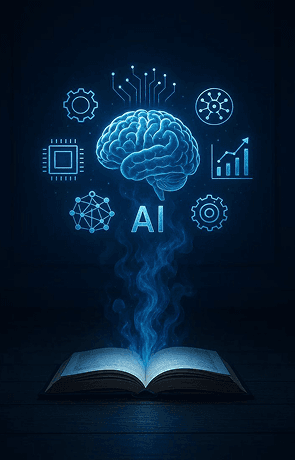
Pioneering degree tracks and interdisciplinary curricula designed to equip graduates with future-ready skills and align education with market demands.

University-led initiatives addressing societal challenges, fostering sustainable development, and creating tangible benefits for local communities.
The institutional innovation strategy strengthens higher education’s role in building Egypt’s knowledge economy, aligning with Vision 2030 by advancing sustainability, fostering innovation, and enhancing education and research to make Egypt a regional center of excellence.
In line with the concept of regional alliances, the competitive call for the initiative was launched on 17 February 2025.

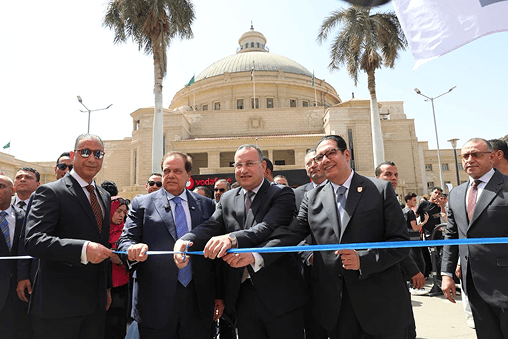
The Ministry of Higher Education launched Be Ready, a national platform to equip students and graduates with job market skills through training and partnerships.

Structure
A coordinated system linking a central innovation unit, strategic champions, and local contact points to drive and monitor institutional innovation.
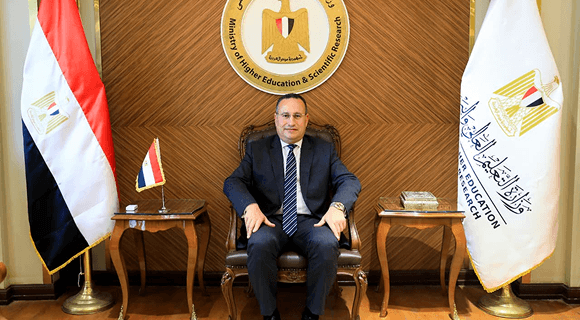
-Set strategic direction and priorities
-Approve the innovation budget
-Approve new initiatives
-Provide oversight and guidance
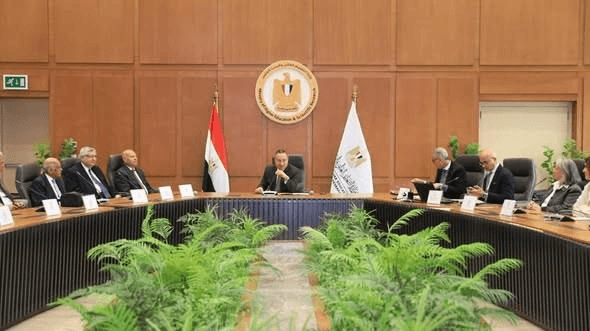
-Lead the innovation strategy and implementation
-Coordinate the Strategic Planning and Innovation
-Sector balances innovation projects
-Manage innovation risks
-Track KPIs, ROI, and impact measurements
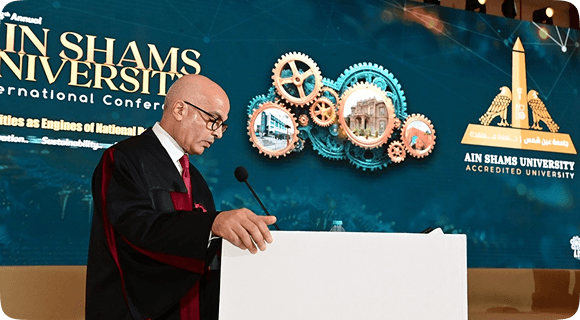
-Identify challenges and opportunities within their domains
-Contribute to the ideation and concept development
-Scale successful innovations
-Generate ideas and prototypes
-Test and iterate on solutions
-Scale successful innovations
(Innovation Labs & Accelerators)
-Implement innovation programs/initiatives
(Provides enabling environment)







Structure
Quantitative and qualitative award indicators.
Mechanism: Central dashboard, semi-annual reviews, incentives and awards.
Infrastructure, institutional design, policies, digital transformation, culture, human capital, partnerships, sustainability, finance.
Mechanism: Integrate each pillar into sector plans with resources and annual follow-up.
Governance, research systems, infrastructure, culture, sustainability, partnerships, future readiness.
Mechanism: Integrate each pillar into sector plans with resources and annual follow-up.
Mechanism: Annual plans, dedicated teams, measurable projects.
Mechanism: Clear roles, horizontal and vertical communication, quarterly review.